Understanding 5G Technology: Benefits, Challenges, and Future in 2025
The rollout of 5G is one of the most significant technological advancements of the 21st century. From faster internet speeds to supporting futuristic technologies like autonomous vehicles and smart cities, understanding 5G technology is crucial for students, professionals, and businesses alike.
In this in-depth article, we’ll explain what 5G is, how it works, its key benefits, challenges, and its impact on industries worldwide.
Table of Contents
-
What is 5G Technology?
-
How Does 5G Work?
-
Benefits of 5G Technology
-
Challenges in 5G Implementation
-
Impact of 5G on Different Industries
-
Healthcare
-
Education
-
Transportation
-
Entertainment
-
Smart Cities & IoT
-
-
Future of 5G in India and Globally
-
FAQs on 5G Technology
What is 5G Technology?
5G stands for the fifth generation of wireless communication technology. It is the successor to 4G LTE and is designed to deliver:
-
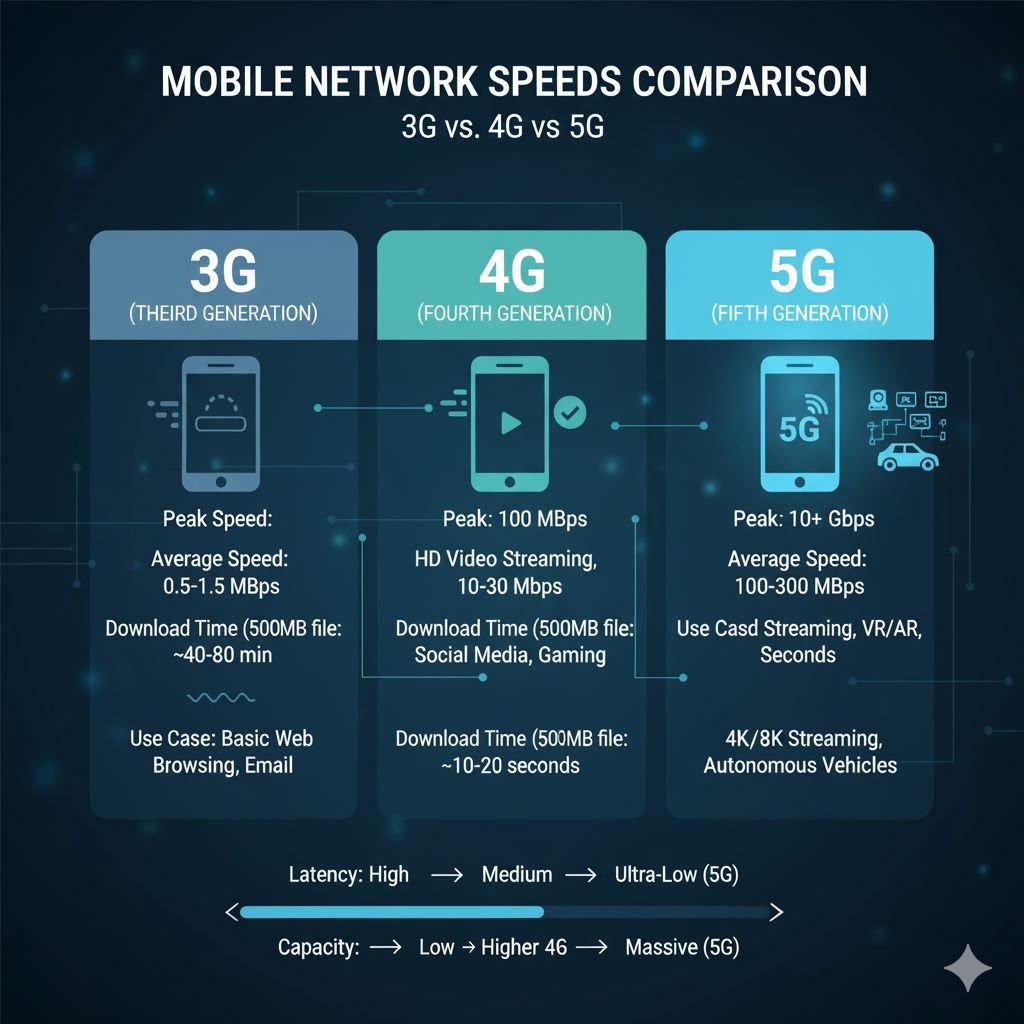
Ultra-fast internet speeds (up to 10 Gbps).
-
Lower latency (as low as 1 millisecond).
-
High network capacity, allowing billions of devices to connect simultaneously.
Simply put, understanding 5G technology means realizing it’s not just faster internet but an enabler of futuristic applications.
How Does 5G Work?
5G works by using higher-frequency radio waves (millimeter waves) and advanced network technologies like small cells, MIMO (multiple input multiple output), and beamforming.
Key points:
-
Millimeter waves carry more data but have shorter ranges.
-
Small cells increase coverage in urban areas.
-
MIMO antennas boost capacity.
-
Beamforming improves signal direction and efficiency.
External Resource: Qualcomm’s guide to 5G
Benefits of 5G Technology
1. Ultra-Fast Speeds
Download full HD movies in seconds and stream 4K/8K content without buffering.
2. Low Latency
Enables real-time applications like autonomous driving and remote surgery.
3. Massive IoT Support
5G can connect billions of devices, powering smart cities and connected homes.
4. Enhanced Reliability
Stronger and more stable connections for businesses and critical services.
You can connect this section to your article AI Tools to Boost Productivity in 2025.
Challenges in 5G Implementation
Despite its benefits, 5G has hurdles:
-
Infrastructure costs: Setting up small cells and antennas is expensive.
-
Spectrum availability: Limited frequency bands.
-
Health concerns: Some people raise questions about radiation exposure.
-
Rural coverage: 5G rollout is slower in remote areas.
Impact of 5G on Different Industries
Healthcare
5G enables telemedicine, remote surgeries, and wearable devices for real-time monitoring.
Education
Virtual classrooms, AR/VR learning, and high-quality remote education become more accessible.
Connect this with your article Best Online Learning Platforms in 2025.
Transportation
Supports self-driving cars and smart traffic management systems.
Entertainment
5G brings seamless AR/VR gaming, faster streaming, and immersive experiences.
Smart Cities & IoT
5G powers smart grids, connected homes, and intelligent city infrastructure.

Future of 5G in India and Globally
-
India: Telecom providers like Jio, Airtel, and Vodafone are rapidly expanding 5G networks across metro and rural areas.
-
Global: Countries like the US, South Korea, and China are leading in adoption.
-
Beyond 2025: Research on 6G has already begun, expected to be 100x faster than 5G.
FAQs on 5G Technology
Q1. What makes 5G different from 4G?
5G is faster, has lower latency, and supports more devices compared to 4G.
Q2. Is 5G available everywhere?
No, 5G is still rolling out, with major cities covered first.
Q3. Does 5G affect health?
According to WHO, 5G radiation levels are safe and within international guidelines.
Q4. How will 5G benefit students?
Students can enjoy faster online classes, AR/VR learning, and better remote collaboration.
Q5. Will 5G replace WiFi?
Not entirely. WiFi will still be used, but 5G will complement it with mobility and speed.
Final Thoughts
Understanding 5G technology is more than knowing it’s “faster internet.” It’s the backbone of innovations in AI, IoT, smart cities, healthcare, and education. While challenges remain, the benefits of 5G far outweigh the hurdles, making it a game-changer for the future.