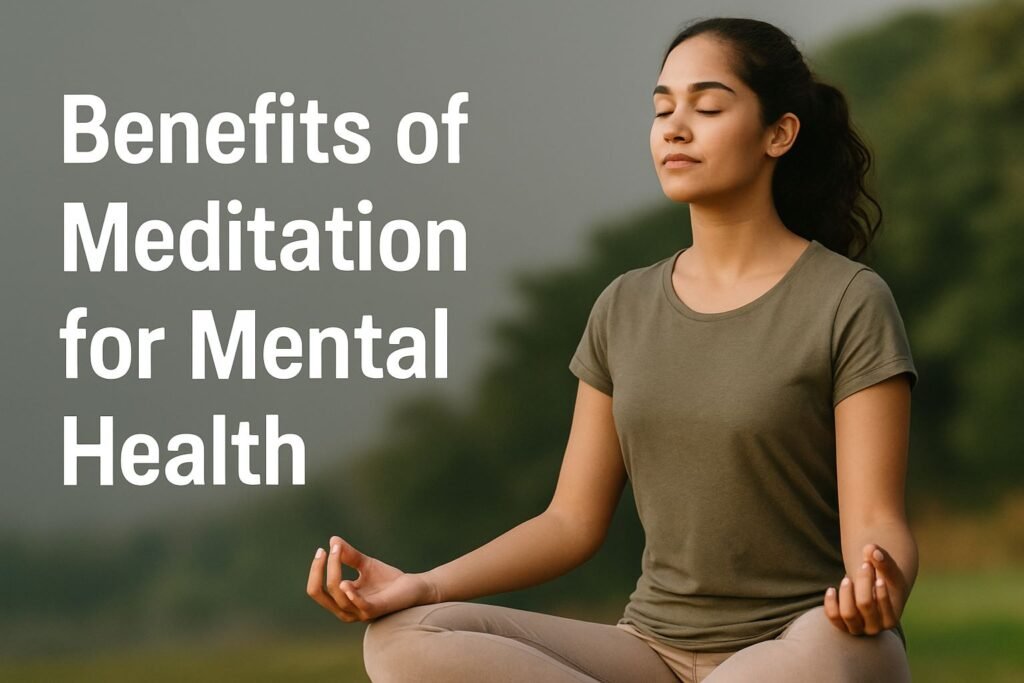
Benefits of Meditation for Mental Health
Meditation has been practiced for thousands of years, but in recent decades, it has gained scientific recognition for its powerful role in supporting mental health. From reducing stress and anxiety to improving focus and sleep quality, meditation offers natural and effective tools to improve emotional well-being. In this guide, we’ll explore the benefits of meditation for mental health, supported by research, and show practical ways to start.
Table of Contents
-
What Is Meditation?
-
Benefits of Meditation for Mental Health
-
Different Types of Meditation
-
How to Start a Meditation Practice
-
Common Challenges and How to Overcome Them
-
FAQs
What Is Meditation?
Meditation is a mental practice that involves focusing your attention, calming your thoughts, and becoming more aware of the present moment. It’s not tied to any religion—rather, it’s a universal practice that anyone can benefit from.
Research from the National Institutes of Health shows that meditation improves brain function and emotional regulation.

Benefits of Meditation for Mental Health
1. Reduces Stress and Anxiety
One of the most recognized benefits of meditation for mental health is stress reduction. Regular practice lowers cortisol, the stress hormone, leading to a calmer mind.
👉 See our guide on Heart Health Tips for Families, where stress management also plays a role.
2. Improves Focus and Concentration
Meditation strengthens your brain’s ability to concentrate. Even short sessions (10 minutes daily) can boost attention span.
3. Helps Manage Depression
Studies published on Mayo Clinic confirm meditation reduces symptoms of depression by creating positive thought patterns and emotional balance.
4. Enhances Emotional Well-being
Mindfulness meditation teaches acceptance and self-compassion. Over time, this reduces negative self-talk and increases overall happiness.
5. Improves Sleep Quality
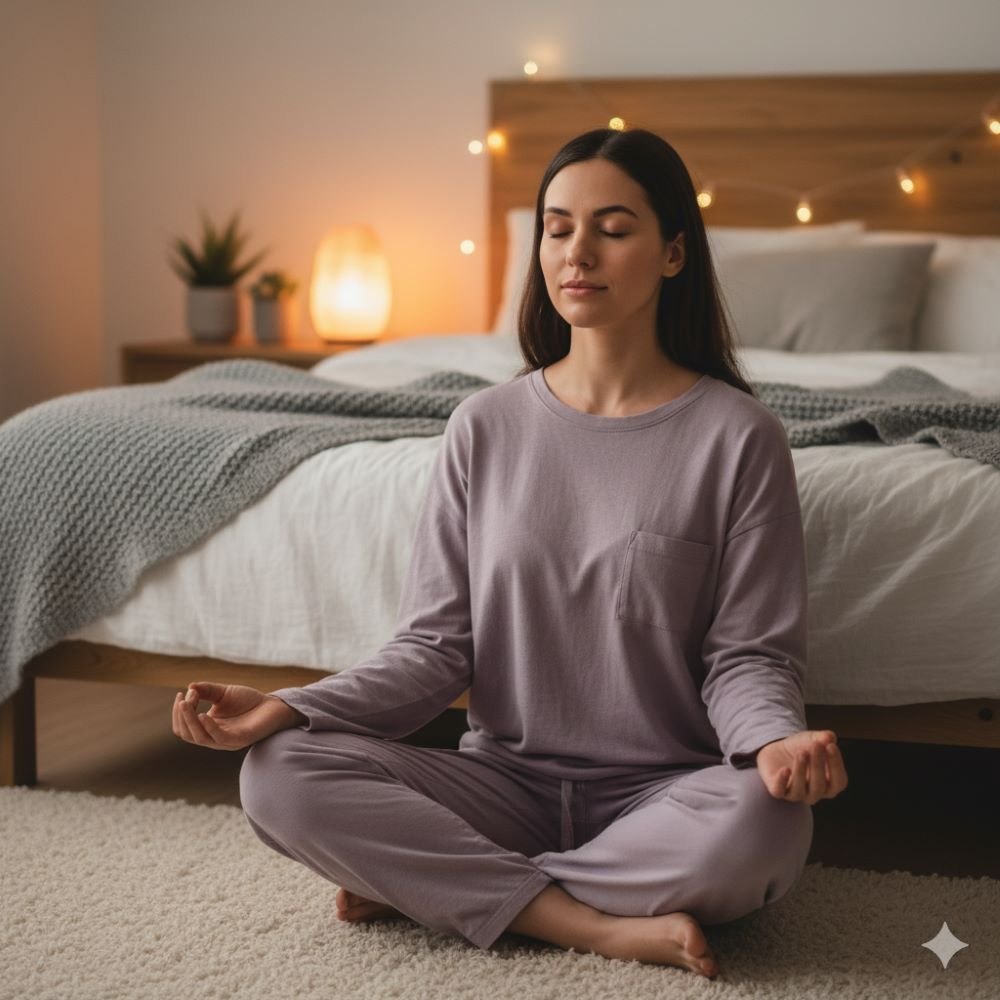
Meditation helps relax the nervous system, making it easier to fall asleep and stay asleep.
👉You may also like our article on Yoga and Stretching for Better Sleep.
Different Types of Meditation
-
Mindfulness Meditation – Observing thoughts without judgment.
-
Transcendental Meditation – Using a mantra for deep focus.
-
Loving-Kindness Meditation – Cultivating compassion for self and others.
-
Body Scan Meditation – Releasing tension by scanning body parts.
External Source: Headspace – Types of Meditation.
How to Start a Meditation Practice
-
Begin with 5–10 minutes daily.
-
Find a quiet space without distractions.
-
Sit comfortably, focus on your breath, and let go of rushing thoughts.
-
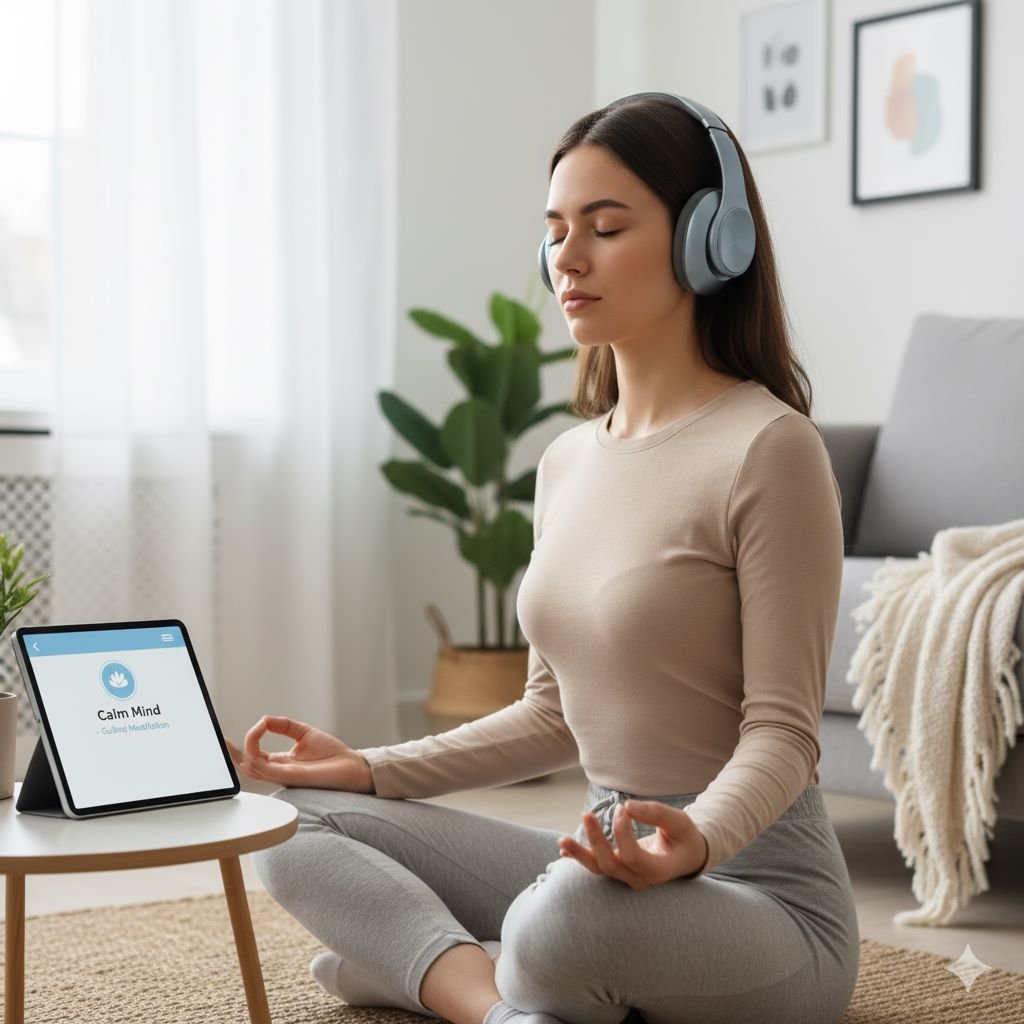
Use meditation apps like Calm or Headspace if needed.
👉 Boosting immunity naturally also benefits the mind. See our guide: Increase Immunity in Children Naturally.
Common Challenges and How to Overcome Them
-
Restless mind: Accept wandering thoughts and gently return focus.
-
Lack of time: Start small with 5 minutes; consistency matters more than duration.
-
Sleepiness: Meditate in the morning or sit upright to stay alert.
FAQs
Q1. How long should I meditate daily for mental health benefits?
Even 10 minutes a day can reduce stress and anxiety. Longer sessions (20–30 minutes) offer deeper benefits.
Q2. Can meditation replace therapy or medication?
No. Meditation supports mental health but should not replace professional treatment. Always consult a healthcare provider if dealing with clinical conditions.
Q3. Is meditation safe for everyone?
Yes, it is safe for most people. However, those with trauma or severe mental health issues should practice under guidance.
Q4. What’s the best time to meditate?
Morning is best for focus, while evening meditation helps with relaxation and better sleep.