Introduction: Eco-Friendly Living Tips
Eco-friendly living at home means making small, smart changes that protect the environment, lower bills, and improve your family’s health. From reducing waste to saving energy and switching to greener products, sustainable living is easier than most people think. In this guide, you’ll learn practical, everyday habits that make your home cleaner, greener, and more mindful of the planet—all backed by research and parent-friendly strategies.
1. Reduce Single-Use Plastics at Home
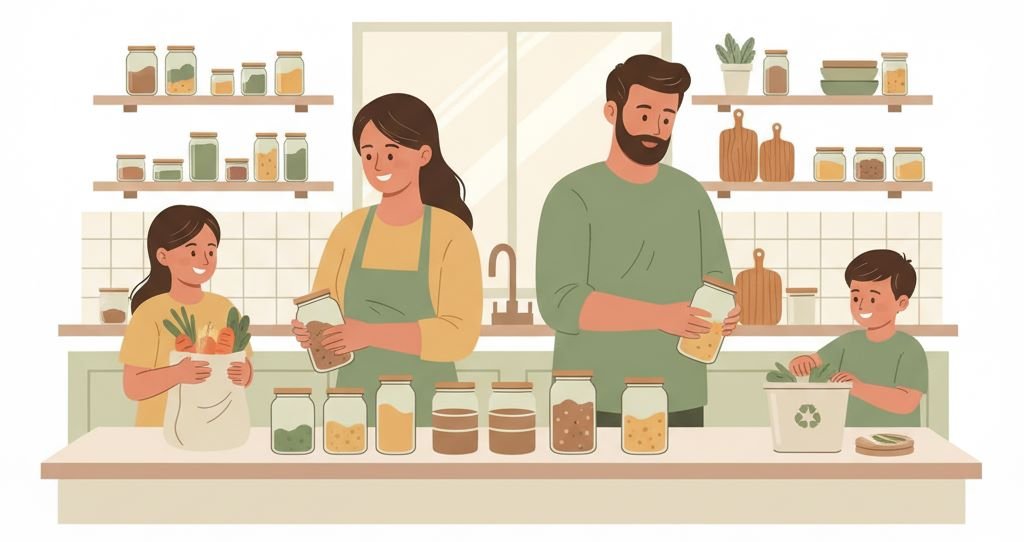
Single-use plastics are one of the biggest sources of household waste. Replace plastic bottles, plastic bags, and disposable containers with long-lasting, reusable alternatives. Glass jars, bamboo containers, and stainless-steel bottles can dramatically cut your plastic footprint. According to the United Nations, plastic pollution affects 800+ marine species every year—so reducing single-use items at home makes a real difference.
Managing Kids’ Screen Time or Seasonal Parenting Tips in the “Family Habits for Kids” context.
United Nations Environment Programme (UNEP).
2. Simplify Your Cleaning Products
Most supermarket cleaners contain harsh chemicals that pollute indoor air and waterways. Switching to eco-friendly solutions—like vinegar, baking soda, and natural enzymes—can create a safer home environment. According to the Environmental Working Group, many commercial cleaners release volatile organic compounds (VOCs) that may affect respiratory health. Eco alternatives clean just as well and smell fresher, too.
Environmental Working Group (EWG).
3. Choose Energy-Efficient Appliances
Upgrading to energy-efficient appliances reduces electricity usage and lowers monthly bills. Look for ENERGY STAR-rated washing machines, AC units, refrigerators, and fans. These appliances use up to 30–50% less energy than traditional models. Even if you can’t replace everything at once, start with the oldest or highest-consumption item.
Energy.gov guide on energy-efficient appliances.
4. Save Energy with Simple Daily Habits
Small actions add up: switch off lights, unplug unused chargers, wash clothes in cold water, and open windows for natural ventilation. The U.S. Department of Energy states that “phantom energy” from plugged-in devices can cost households $100–200 per year. Teach kids to turn off lights when leaving rooms—it becomes an easy lifelong habit.
5. Adopt Water-Saving Techniques
Eco-friendly homes also conserve water. Install low-flow faucets, fix leaks quickly, and limit shower time to five minutes. Collecting rainwater for plants reduces total consumption. A leaking tap can waste up to 3,000 liters per year—enough for several families’ monthly usage.
World Health Organization (WHO) water conservation guidelines.
6. Create an Indoor Plant Corner
Indoor plants improve air quality by absorbing toxins and increasing oxygen levels. Species like snake plants, spider plants, aloe vera, and pothos require low maintenance and thrive indoors. Harvard research shows that cleaner indoor air improves focus, mood, and sleep quality—perfect for kids and parents.
7. Switch to LED Lighting
LED bulbs use 75% less energy than traditional bulbs and last up to 25 times longer. Although slightly costlier upfront, they reduce electricity costs dramatically over the long term. Replacing all home bulbs with LEDs is one of the easiest and fastest sustainability upgrades you can make.
8. Reduce Food Waste with Smarter Planning
Food waste is a major environmental issue—families can cut it by planning meals, storing leftovers properly, and freezing excess food. Use airtight containers and maintain a weekly fridge-cleaning routine. The Food and Agriculture Organization (FAO) reports that one-third of global food production is wasted—your home can help reduce this impact.
FAO Food Waste Report.
9. Choose Sustainable Home Materials
When buying furniture or home décor, choose eco-friendly materials like reclaimed wood, bamboo, rattan, cork, or recycled textiles. These materials have a lower carbon footprint and often last longer. Even small décor changes—like switching from plastic to jute baskets—make your home more natural and calming.
10. Make Laundry More Eco-Friendly
Use cold water, biodegradable detergents, and shorter washing cycles whenever possible. Air-dry clothes rather than using a dryer to save energy. Front-loading machines also use 40–60% less water than top-loading ones, making them a smarter long-term choice.
Cardio vs Weights for fitness + lifestyle synergy.
11. Start Composting Kitchen Waste
Composting reduces landfill burden and turns kitchen waste into nutrient-rich soil. You can compost vegetable scraps, fruit peels, tea leaves, and coffee grounds. Even if you live in an apartment, small compost bins or bokashi systems make composting easy and smell-free. Compost improves plant health naturally—no chemical fertilizers needed.
12. Teach Kids About Sustainable Living
Eco-friendly living becomes easier when kids are involved. Create fun habits like sorting recyclables, turning off taps, or planting herbs together. When children learn early, sustainability becomes a natural part of daily life.
Managing Kids’ Screen Time (habit-building behavior).
Seasonal Parenting Tips (healthy home environment).
📌 FAQ Section
Q1: What is the easiest eco-friendly change to start with at home?
The easiest changes include switching to LED bulbs, reducing single-use plastics, and turning off unused lights. These small steps require no investment but have a big environmental impact.
Q2: How can families reduce energy bills with eco-friendly habits?
Using energy-efficient appliances, unplugging devices, washing clothes in cold water, and optimizing natural daylight helps reduce monthly bills. Smart power strips can eliminate phantom power usage.
Q3: Can eco-friendly living improve indoor health?
Yes. Using natural cleaners, reducing plastic use, adding indoor plants, and improving ventilation all reduce indoor pollutants and support better respiratory health.
Q4: Are eco-friendly products more expensive?
Some are, but they last longer and save money over time. For example, LED bulbs save electricity, reusable bottles replace many plastic ones, and energy-efficient appliances reduce long-term bills.
Q5: How do I teach children eco-friendly habits?
Start with simple, fun tasks: recycling, planting mini-gardens, turning off taps, and choosing reusable bottles. Visual charts help kids understand sustainability as a daily habit.
Conclusion
Eco-friendly living at home doesn’t require big investments—just small, consistent changes that benefit your family and the planet. By reducing waste, conserving energy, choosing sustainable products, and teaching kids better habits, you can create a greener home that feels healthier and more mindful. Start with one habit today, and let the transformation grow naturally.