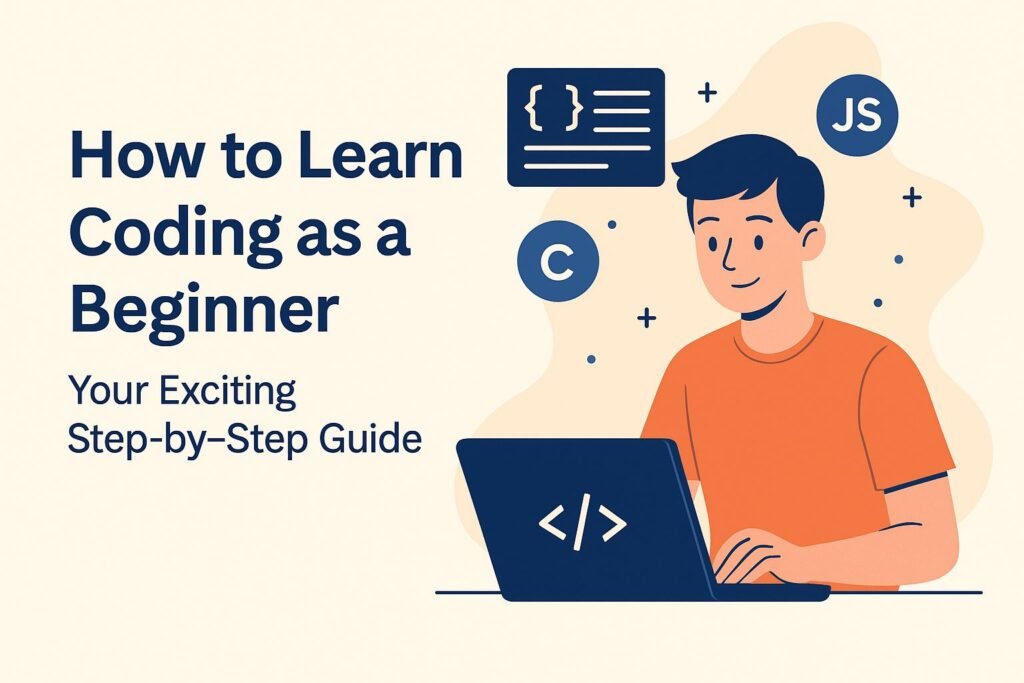
How to Learn Coding as a Beginner: Step-by-Step Guide
If you are new to programming, the thought of learning coding might feel overwhelming. But here’s the good news: you don’t need to be a math genius or a computer science graduate to start. Many beginners learn coding step by step and successfully build careers in software development, data science, or freelancing.
In this detailed guide, we will explore how to learn coding as a beginner, the best resources to use, mistakes to avoid, and practical projects to try. By the end, you’ll have a clear roadmap to begin your programming journey.
Why Learning Coding is Important in 2025
-
High demand: According to NASSCOM and LinkedIn reports, programming skills remain among the most in-demand skills globally.
-
Job flexibility: Remote work and freelancing opportunities are abundant for coders.
-
Career growth: Coding skills open up roles in web development, mobile app development, AI, blockchain, and cloud computing.
-
Problem-solving: Coding teaches logical thinking, which can improve how you approach everyday challenges.
👉 Just like building healthy study habits with Effective Study Techniques for Students, learning coding step by step requires consistency and discipline.
Step 1: Understand the Basics of Coding
Before diving into languages, understand what coding really means. Coding is simply giving instructions to a computer to perform tasks. Every program, from your smartphone apps to online banking systems, is powered by code.
Key concepts beginners should know:
-
Variables – Store information like numbers or text.
-
Loops – Repeat a set of instructions.
-
Functions – Reusable blocks of code.
-
Syntax – The grammar of a programming language.
👉 External link: W3Schools is a great free site to learn the basics of coding.
Step 2: Choose the Right Programming Language
Don’t waste time trying to learn everything at once. Pick one beginner-friendly language and focus on it.
-
Python – Great for AI, data science, and automation. Very beginner-friendly.
-
JavaScript – The backbone of web development. Works in every browser.
-
Java – Stable and widely used in mobile apps and enterprises.
-
Scratch (for kids and absolute beginners) – Visual programming with drag-and-drop blocks.
Pro Tip: Start with Python or JavaScript if you’re not sure which one to choose.
Step 3: Use Learning Platforms
You don’t need to join an expensive coding bootcamp immediately. Start with online platforms:
-
FreeCodeCamp – 100% free, project-based learning.
-
Coursera & edX – University-level courses (some free).
-
Udemy – Affordable step-by-step tutorials.
-
Khan Academy – Beginner-friendly lessons for school students.
👉 Related article: Check our guide on Best Online Learning Platforms in 2025.
Step 4: Learn by Doing (Practice Projects)
Theory won’t stick until you practice. Beginners should start with small coding projects such as:
-
A personal portfolio website (HTML, CSS, JavaScript).
-
A to-do list app (JavaScript or Python).
-
A unit converter (C++ or Java).
-
A basic game like Tic-Tac-Toe.

Step 5: Join Coding Communities
Coding is easier when you’re not alone. Join communities to get support and learn from others.
-
Stack Overflow – Ask and answer coding questions.
-
Reddit (r/learnprogramming) – Active beginner-friendly group.
-
GitHub – Share and collaborate on projects.
-
Local Meetups – Coding clubs and hackathons in your city.
Step 6: Build a Learning Routine
A common beginner mistake is studying irregularly. Instead, build a schedule:
-
1 hour per day minimum for practice.
-
Mix theory (30%) and hands-on coding (70%).
-
Weekly goal: Complete a mini project or solve 10–20 coding problems.
👉 External link: Platforms like LeetCode and HackerRank help you improve coding problem-solving skills.
Step 7: Avoid Common Beginner Mistakes
Many beginners quit coding because of avoidable mistakes. Here’s what to avoid:
-
Trying too many languages at once. Stick to one until you’re comfortable.
-
Only watching tutorials without practicing.
-
Skipping fundamentals. Learn variables, loops, and logic before diving into frameworks.
-
Comparing yourself with advanced coders. Everyone starts small.
Step 8: Build and Share a Portfolio
Once you complete a few projects, don’t keep them hidden. Showcase your work.
-
Upload projects to GitHub.
-
Create a personal portfolio website.
-
Share projects on LinkedIn to attract recruiters.
-
Contribute to open-source projects.
👉 Internal link: Just like applying for Scholarships Every Student Should Know About, showcasing your portfolio improves your chances of being noticed.
Advanced Step: Explore Career Paths
Once you have coding basics, explore career directions:
-
Web Development (Front-End & Back-End).
-
Mobile App Development (Android, iOS).
-
Data Science & AI (Python, R, Machine Learning).
-
Game Development (Unity, Unreal Engine).
-
Cybersecurity (ethical hacking, secure coding).
FAQs – How to Learn Coding as a Beginner
Q1. How long will it take me to learn coding as a beginner?
Most people take 3–6 months for basics and 1–2 years for mastery.
Q2. Can I get a job after learning coding online?
Yes, many companies hire self-taught developers if you show a strong portfolio.
Q3. Do I need a laptop to learn coding?
Yes, but you don’t need a high-end machine. Even basic laptops work for beginner coding.
Q4. What is the best free way to learn coding?
FreeCodeCamp, W3Schools, and YouTube tutorials are excellent starting points.
Q5. Is coding hard to learn?
It feels difficult at first, but with practice and projects, it becomes easier.
Final Thoughts
Learning to code is like learning a new language—it takes time, practice, and consistency. The good news is that beginners today have access to thousands of free and paid resources to get started.
By following this step-by-step guide on how to learn coding as a beginner, you can start small, practice consistently, and build projects that showcase your skills. Remember, the key is not to give up—every professional coder was once a beginner too.